
Emergency Range Session on a Golf Trip
- Updated: October 4, 2026
You’re six holes into your $3,500 golf trip when disaster strikes. You catch hosel on the par-three seventh, spend well over three minutes looking for the ball, drop somewhere near where you think it is, make triple, and delegitimize your score all within a ten-minute window. It doesn’t get better from there, and you end up posting a 93. Certainly not your worst. But also not what you want to shoot when you’ve planned your whole season around peaking for the trip.
You make a conscious decision not to panic.
So much so that you decide not to even warm up for the next round. It can only be detrimental after yesterday’s exhibition. Sometimes a rolling straight to the first tee is the move, and today is feeling like one of those times.
About five hours later you realize that no warm up may have been yet another poor decision amongst a slew of them in the last forty eight hours. You snap hook, chunk, and blade your way to a worse score than yesterday. That’s another $400 down the drain, and about $850 in total.
Your golf trip is now officially a depreciating asset.
That’s the thing about paying for a golf trip up front. Three months ago it was one painful Venmo to your planner and financier. But now that you’re here, you start assigning a value to everything that’s already been paid for. Four rounds. Three nights. A couple dinners. Suddenly every chunked wedge has a dollar amount attached to it.
You start doing the math. You’ve played 36 holes and taken 187 shots, meaning you’re currently getting more golf for your money than anyone else in the group. Your cost per shot is plummeting. Unfortunately, so is the underlying asset.
Unfortunately, that’s not how this particular investment works. You put all this money down expecting a return of some sort. Some birdies. Some solid shots. A green in regulation.
You hit the range hard in the last couple weeks and even took a couple lessons. You showed up expecting your game to be at an all-time high. Instead, your portfolio is down twenty four percent in two days and you’re holding a distressed asset with two rounds left until maturity.
But there’s still time to turn this around.
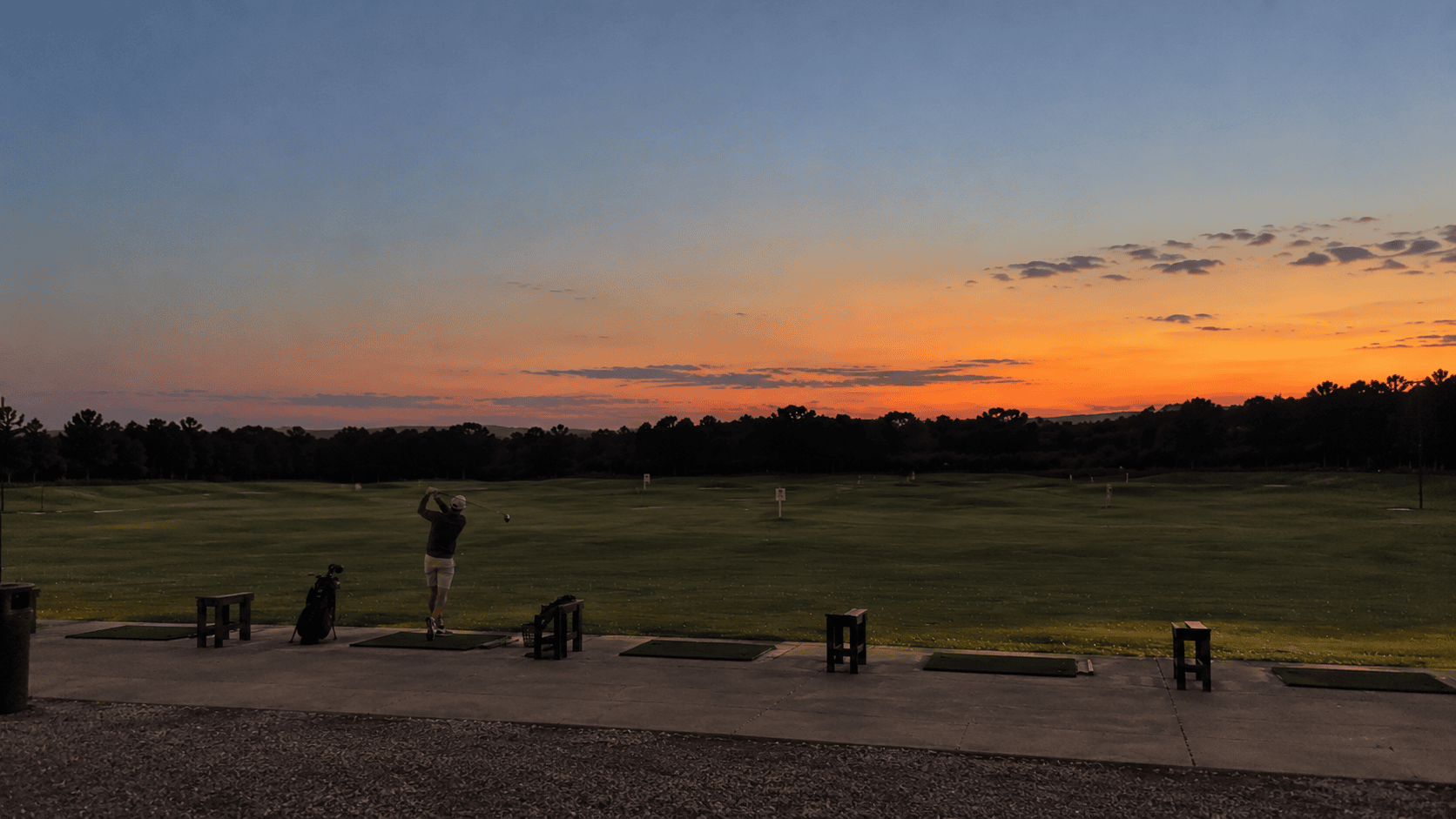
You still have two rounds left. That’s over $1,700 of unrealized golf still sitting on the table. You’re not about to watch it disappear without doing something. So while everyone else settles in with a drink and starts figuring out dinner, you grab your heads and head to the range.
This is no longer practice. This is asset protection. Time to grind.
You start with the driver. This is where most of the damage has been done. You spend hours tinkering with your grip pressure, your alignment, your footwork. You pull up YouTube videos from 2012 and borrow a towel from someone else at the range to do some very specific drills.
At some point you stop trying to fix your swing and start preparing for survival. You gun every pin and hit about seventy punch shots with five different clubs to prepare for the most likely scenarios on the course.
You head over to the putting green just before dusk and putt until long after the sun sets. You can’t read the putts after long, but based on the last two days it wouldn’t make much difference. After you’ve decided that you left it all out there, you head back to join your buddies who have been passed out for a while. Your next tee time is in five hours. Better get some sleep.
That range session could have been the best investment you’ve ever made.
Or at least the best one you made this week. Because it certainly wasn’t that overpriced box of TP5s you bought in the pro shop after you lost all the balls in your bag.
You wake up the next morning surprisingly refreshed, considering the circumstances. More importantly, you’re confident. Somewhere between the stranger’s discolored towel and putting in pitch black swatting mosquitos, you found something.
You head to the course with a renewed sense of optimism. There’s still $1,700 of golf left on this trip, and you intend to make it count.
You announce to the group that you found something last night in the twilight hours and proceed to spend the next four and a half hours proving it. The punch shots never become necessary. A few putts fall. You walk off eighteen with a respectable score and two more balls in your bag than you started with.
Yesterday, you were ready to dump all your shares and head home. But today you’re savoring the moments. The air was fresher. The grass was greener. Mostly because you were in the fairway and not the fescue and trees.
Of course, none of the money was ever really lost. You were still on a golf trip with your buddies, playing courses you’d been looking forward to for months. A 93 didn’t make any of that worth less.
But it sure as hell felt like it did.
And sometimes, an emergency range session is all it takes to stop the bleeding.
Two Inches Short is a place where amateur golfers can unapologetically be themselves. It’s where we can all relate to the greatest game ever played at a level we can all understand.
Follow Two Inches Short on Twitter, Instagram, and Facebook!
“Making triple bogey from the middle of the fairway isn’t just about skill, it’s a lifestyle.”